
Residential Bathroom Remodeling
Bathroom Flooring in Jacksonville, FL
Bathroom floors deal with more standing water, temperature swings, and foot traffic in bare feet than almost any other room, which narrows the practical material choices even before style enters the conversation. The two we install most often in Jacksonville bathrooms are luxury vinyl plank and porcelain tile, and each comes with tradeoffs worth understanding before deciding.
Beyond material, what's underneath the floor matters just as much, since Jacksonville's mix of slab-on-grade construction and older raised wood-framed homes each call for different prep before new flooring goes down.
Call now for service availability. Please have your 5-digit ZIP code ready.
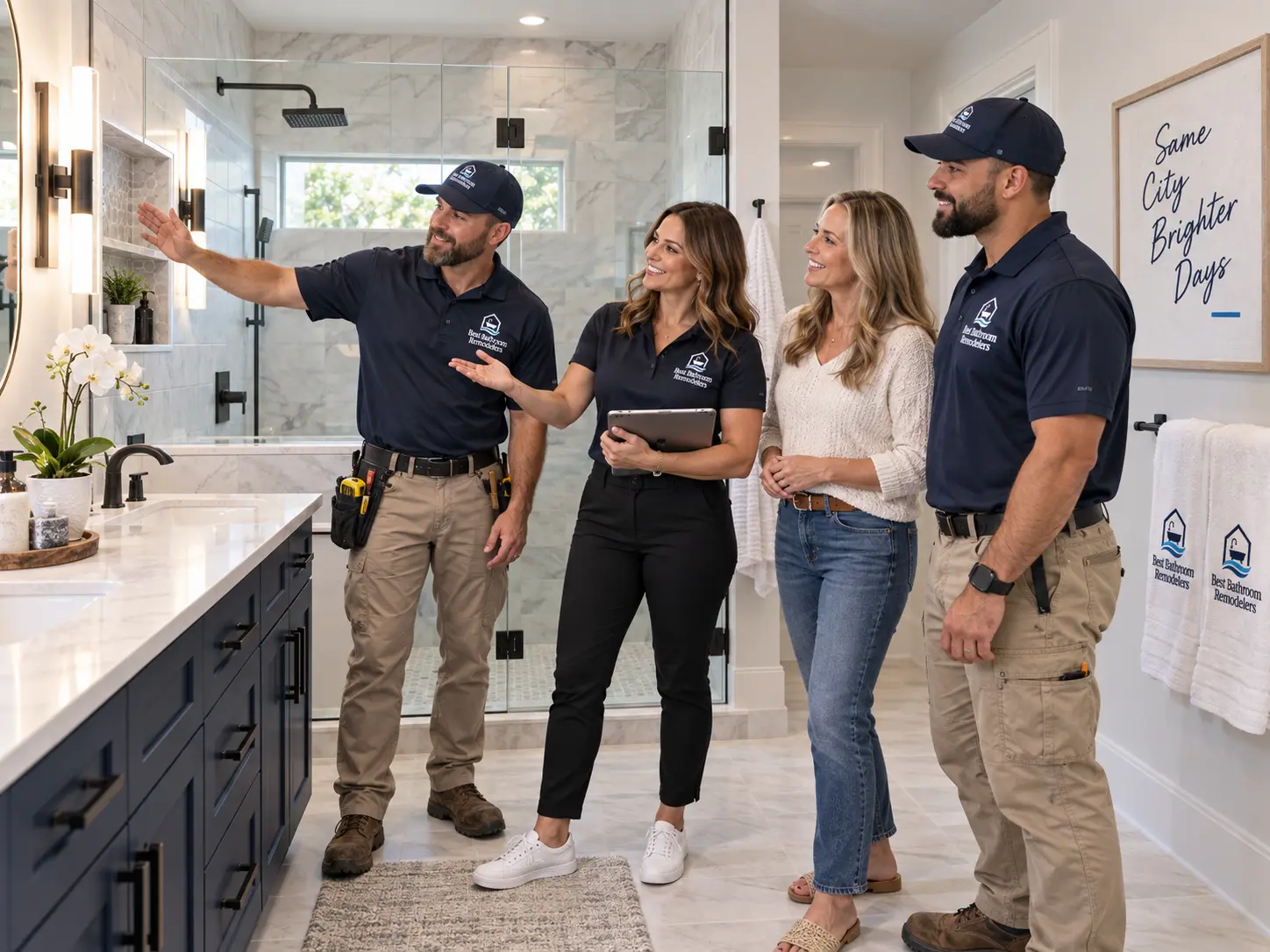
Who this works well for
- Homeowners replacing worn sheet vinyl, dated tile, or water-damaged flooring
- Anyone comparing LVP and porcelain tile for a bathroom remodel budget
- Households with slip concerns, including those with young kids or older residents
- Older Jacksonville homes with wood subfloors showing signs of moisture damage near the tub or toilet
LVP versus porcelain tile
Luxury vinyl plank, specifically rigid-core waterproof varieties, has become a common bathroom choice because it's comfortable underfoot, less expensive than tile, and forgiving of minor subfloor imperfections. Porcelain tile costs more and is a harder, colder surface, but it's more durable long-term and doesn't have the seams or edges where water can eventually work its way in around a vinyl plank's locking joints.
We generally recommend porcelain in showers and areas with sustained water exposure, while LVP is a reasonable choice for the rest of a bathroom floor where it won't see standing water regularly.
Slip resistance
Wet bathroom floors are a real slip hazard, so we pay attention to a tile's coefficient of friction rating, not just its look, particularly for floors near a shower or tub. Textured or matte-finish porcelain performs better than polished tile, and many LVP products have embossed textures that add grip even when wet.
Subfloor and slab prep
On slab-on-grade floors, common throughout Jacksonville, we check for moisture and flatness before installing either material, since a slab that's out of level by more than typical tolerances needs leveling compound before flooring goes down cleanly. On raised wood-framed homes, more common in some of the older Riverside and Avondale housing stock, we check subfloor sheathing for soft spots or water damage, especially around the toilet flange and tub, and replace compromised sections before installing new flooring over them.
Transitions and thresholds
Where bathroom flooring meets hallway flooring, the transition strip needs to account for any height difference between materials, and that difference is often larger than expected when going from LVP to hardwood or from tile to carpet. At the shower or tub, we plan the threshold height and slope carefully so water drains back into the wet area rather than pooling at the transition.
Moisture protection at toilets and tubs
The toilet flange and the tub or shower base are the two spots most likely to develop hidden water damage over time, either from a slow wax ring failure at the toilet or from caulk that's failed at the tub edge. When we replace flooring, we inspect both areas closely and address the flange height and any subfloor damage before new flooring goes in, rather than installing over a problem that will resurface.
Radiant heating considerations
Some homeowners add electric radiant floor heating under new tile during a flooring replacement, since the floor is already being opened up. This works well under porcelain tile and adds meaningful comfort on cooler mornings, though it does add cost and requires a compatible thermostat and dedicated electrical circuit.
Jacksonville-specific considerations
Humidity affects how flooring materials perform over time, particularly at seams and edges where moisture can accumulate if ventilation is poor. In slab-on-grade homes we sometimes recommend a moisture-mitigating underlayment beneath tile if slab moisture testing shows elevated readings, which is more common in older Jacksonville homes than newer Southside or Bartram Park construction.
Flooring replacement alone typically doesn't require a permit, but if the toilet flange is being relocated or the subfloor structure is being altered, that work falls under the Florida Building Code, 8th Edition (2023), and needs review through the City of Jacksonville Building Inspection Division.
How our process works
We start by removing the existing flooring and inspecting the subfloor or slab underneath, since that inspection often changes the scope more than the flooring material choice does. From there we address any moisture or leveling issues, install the new flooring, and finish transitions and trim.
Budget
What changes the price
- Material choice: Porcelain tile generally costs more in material and labor than rigid-core LVP.
- Subfloor condition: Water-damaged subfloor sheathing needs to be replaced before new flooring goes down.
- Slab leveling: Out-of-level slabs need self-leveling compound before tile or LVP can install flat.
- Toilet and tub area repairs: Addressing a failed wax ring or damaged subfloor at the tub adds to the scope.
- Radiant heating: Adding electric floor heating under tile adds material and electrical work.
- Transition complexity: More doorways and material transitions mean more transition strips and trim work.
- Baseboard and trim: New flooring often calls for new or reset baseboards for a clean finished look.
Schedule
What affects the schedule
LVP installation over a sound, flat subfloor is one of the quicker flooring updates we do, since there's no grout curing time involved.
Porcelain tile floors take longer due to substrate prep, thin-set curing, and grouting, and that timeline extends further if subfloor or slab repairs are needed once the old flooring comes up.
Jacksonville considerations
Slab-on-grade construction is the norm across most of the area, which shapes how we approach leveling and moisture testing before flooring installation.
Older homes in neighborhoods like Riverside and Avondale are more likely to have wood subfloors needing inspection near the tub and toilet.
Humidity makes ventilation and material choice at floor edges and transitions worth extra attention.
Our Process
How we run this work
- 01
Remove existing flooring
Old flooring is taken up and the subfloor or slab underneath is exposed.
- 02
Inspect substrate
We check for moisture, damage, and level, particularly near the tub and toilet.
- 03
Repair as needed
Damaged subfloor sections are replaced or the slab is leveled before proceeding.
- 04
Install new flooring
LVP or tile is installed according to the material's specific method and pattern.
- 05
Set transitions and trim
Threshold strips and baseboards are installed for a finished look.
- 06
Final walkthrough
We check for level, secure transitions, and proper sealing at wet-area edges.
Design Inspiration
Bathroom Flooring design inspiration
Design references for this type of work. Tap any image for a larger view and the details worth noticing.
Marble Shower and Tub over Herringbone Floors
A wood-look herringbone floor warms up a room finished in marble tile, and a pebble shower floor adds texture underfoot.
Explore Bathroom FlooringWalk-In Shower with Pebble Floor and Bench
A pebble shower floor adds grip underfoot, while a bench and recessed niche keep the enclosure practical day to day.
Explore Shower RemodelingCoastal Bathroom with Water Views
Soft blue-gray walls, white cabinetry and light wood-look plank flooring suit Jacksonville's waterfront and beachside homes.
Explore Full Bathroom RemodelingFreestanding Tub Under a Window
Placing a freestanding tub under a window borrows daylight and leaves the shower and vanity walls free for storage.
Explore Bathtub ReplacementRelated Services
Services homeowners often pair with this
Questions
Frequently asked questions
LVP is more affordable and comfortable underfoot, while porcelain tile is more durable and has no seams for water to work into over time. We recommend porcelain for areas with regular water exposure and consider LVP a solid choice for the rest of the bathroom floor.
On a slab, we use self-leveling compound to correct minor unevenness before installing new flooring. On a wood subfloor, we address any damaged sections and can shim or level the framing if needed before flooring goes down.
That's usually a sign of past water intrusion from a failed wax ring or seal, and it needs to be repaired before new flooring is installed, since flooring over a soft subfloor won't hold up and can create a safety issue over time.
It is usually installed under porcelain or ceramic tile. Some LVP products are rated for radiant heat, but the heat output has to stay within the manufacturer's limits, so we confirm compatibility before recommending it.
Simple flooring replacement generally doesn't require a permit. If the toilet flange needs to be relocated or subfloor framing is altered, that falls under the Florida Building Code, 8th Edition (2023), and requires review through the City of Jacksonville Building Inspection Division.
We plan the threshold height and slope so water drains back toward the shower rather than pooling at the transition, and we use appropriate waterproofing or sealant at that joint depending on the flooring materials involved.
Next Step
Planning a Bathroom Remodel in Jacksonville?
Tell us what you want the finished bathroom to do differently, and our team will walk through scope, materials and next steps with you.
Call now for service availability. Please have your 5-digit ZIP code ready.