
Residential Bathroom Remodeling
Shower Remodeling in Jacksonville, FL
Shower remodeling is about rebuilding and updating an existing shower area: the pan, the waterproofing behind the tile, the tile itself, the valve and fixtures, the glass, and details like niches and benches. The shower stays where it is; what changes is how it is built and how it looks.
We start by identifying what is actually failing or outdated, since the right fix for cracked grout is different from the right fix for a leaking valve or a worn-out fiberglass unit. If the goal is a lower step-in, see walk in shower remodeling; if a bathtub is being removed to make room, see tub to shower conversion.
Call now for service availability. Please have your 5-digit ZIP code ready.
Who this works well for
- Homeowners with a functional shower footprint that just needs updated finishes
- Anyone dealing with cracked tile, failing grout, or a discolored fiberglass surround
- Shower/tub combinations that need a fixture or surround refresh without full conversion
- Households replacing an old single-handle valve with a modern pressure-balance or thermostatic valve
Tile surround versus panel systems
Tile remains a popular shower surround in Jacksonville because it holds up well and offers the most design flexibility, but it depends entirely on proper waterproofing behind it. Solid surface and acrylic panel systems are a legitimate alternative, especially when grout maintenance is a concern; they install faster and have fewer seams, though they offer fewer design options than tile.
We'll walk through both if you're unsure, since the right call depends on maintenance preference and budget as much as looks.
Working with an existing footprint
Many shower remodels keep the existing pan or tub and focus on the walls, valve, and showerhead. This keeps plumbing changes minimal and controls cost, but it does mean the new surround has to be built around what's already there, including an existing shower pan's slope and drain location.
If the pan itself is cracked, discolored, or was never properly sloped, that's the point where a shower remodel expands into rebuilding the shower floor as well.
Valve and fixture upgrades
Older single-handle valves can be replaced with pressure-balance or thermostatic valves, which hold water temperature steady even if another fixture in the house draws water. This usually requires opening the wall behind the valve, which is a natural pairing with a surround replacement since that wall is already being worked on.
- Showerheads: Fixed, rain-style, or handheld units, sometimes combined on a slide bar.
- Valve type: Pressure-balance valves are now standard for scald protection; thermostatic valves add precise temperature control.
- Trim finish: Matching or coordinating finishes across the valve trim, showerhead, and any grab bars or hardware.
Waterproofing when reworking a surround
Any time we remove tile down to the studs, the wall gets a proper waterproofing membrane over cement board before new tile goes up, rather than relying on the tile and grout alone. If the surround is being replaced with a panel system instead, waterproofing is built into the panel seams and the connection at the pan, which is one reason panel systems can be a faster install.
Design choices within the surround
Tile size, layout pattern, and accent bands all get decided at this stage. Larger-format tile means fewer grout lines and a cleaner look, but it requires a flatter substrate to install correctly. Niches for shampoo storage and a small bench are common additions that fit within an existing footprint if there's enough depth in the wall cavity.
What changes the price
Full tile replacement costs more than a panel system, and any valve replacement that requires opening a wall from the opposite side, such as a shared wall with a closet, adds access work. Niches, benches, and glass enclosures each add to the scope beyond a basic surround swap.
Jacksonville-specific considerations
Humidity is a year-round factor here, so grout selection and ventilation matter more than in drier climates; we typically recommend epoxy or high-performance cementitious grout for its resistance to staining and mildew. In older homes, we also check the condition of the shower valve's supply lines before starting, since galvanized pipe common in some pre-1970s Jacksonville homes can be brittle by now.
How our process works
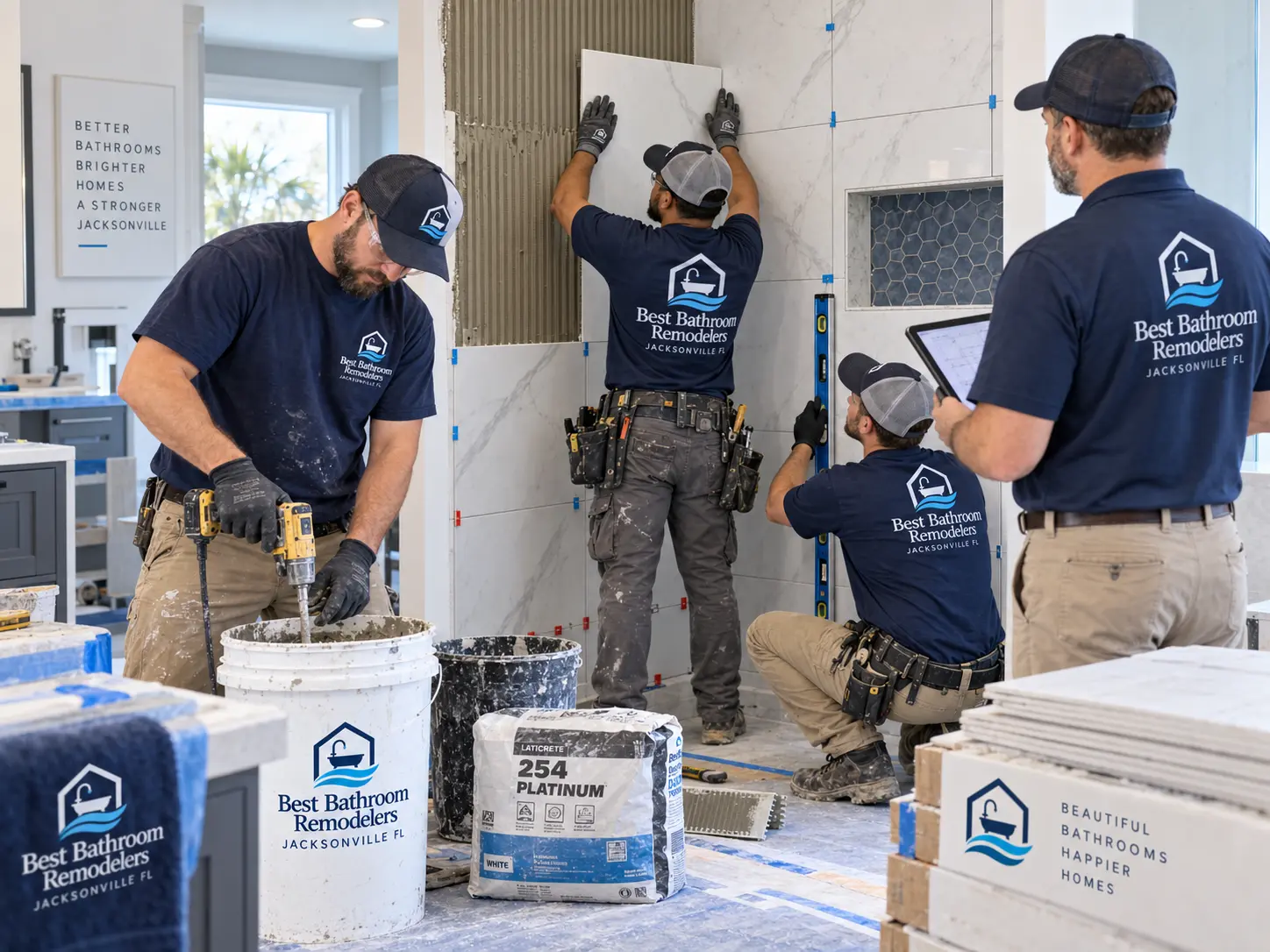
We assess the existing shower, pan, and valve condition first, since that determines whether this is a surface remodel or something closer to a rebuild. From there we finalize material choices, remove the old surround, address waterproofing, and install new tile or panels along with fixtures.
Budget
What changes the price
- Tile vs. panel system: Full tile costs more in labor and material than a solid surface or acrylic panel system.
- Valve replacement: Swapping to a pressure-balance or thermostatic valve adds plumbing labor, more if wall access is limited.
- Pan condition: A cracked or poorly sloped existing pan turns a surround remodel into a floor rebuild.
- Niches and bench: Each addition requires extra framing, waterproofing, and tile detail.
- Tile size and pattern: Large-format tile and decorative patterns take more labor time than a basic layout.
- Glass or curtain: Enclosure choice affects both material cost and how much of the surround needs to be finished.
Schedule
What affects the schedule
A surround-only remodel that keeps the existing pan generally moves faster than a full shower rebuild, since there's less demolition and no floor waterproofing to redo.
If the pan or valve access changes the scope mid-project, that will extend the timeline; we flag that possibility during the initial assessment rather than after work has started.
Jacksonville considerations
Humidity year-round makes grout choice and ventilation a real factor in how long a new surround looks good.
Older homes may still have galvanized supply lines feeding the shower valve, which we check before beginning valve work.
Salt air near the coast is a consideration for hardware and trim finish selection.
Our Process
How we run this work
- 01
Assess existing shower
We check the pan, valve, and wall condition to determine the real scope.
- 02
Select materials
Tile or panel system, valve type, and fixtures are finalized.
- 03
Remove old surround
Tile, panels, or fiberglass are removed down to the substrate.
- 04
Address waterproofing
Membrane goes over the substrate before any new surface is installed.
- 05
Install new surround
Tile or panels go in, followed by valve trim and showerhead.
- 06
Final check
We test the valve and inspect seams and grout lines before calling it complete.
Design Inspiration
Shower Remodeling design inspiration
Design references for this type of work. Tap any image for a larger view and the details worth noticing.
Walk-In Shower with Pebble Floor and Bench
A pebble shower floor adds grip underfoot, while a bench and recessed niche keep the enclosure practical day to day.
Explore Shower RemodelingSingle Glass Panel Shower with a Wood Vanity
One fixed glass panel instead of a door keeps a shower open and easy to clean, with black hardware tying the vanity and fixtures together.
Explore Shower RemodelingCompact Bathroom with a Single Wood Vanity
In a tighter footprint, one wood vanity and a corner glass shower keep the walking path open and uncluttered.
Explore Small Bathroom RemodelingWide Shower with Bench Beside a Soaking Tub
A wider enclosure with a corner bench and open towel shelving nearby keeps everyday use easy without crowding the tub.
Explore Bathroom Tile InstallationRelated Services
Services homeowners often pair with this
Questions
Frequently asked questions
Often, yes, if the existing pan is sound, properly sloped, and free of cracks. We inspect the pan before finalizing scope, because building new tile over a bad pan just hides a problem that will resurface as a leak.
Quality solid surface and acrylic panel systems hold up well and have fewer seams than tile, which means less grout maintenance. Tile offers more design flexibility but depends entirely on the waterproofing and grout behind it staying intact over time.
If plumbing isn't being altered, some surround-only projects fall outside permit requirements, but that depends on the specific scope. Any valve relocation or plumbing change generally requires a permit under the Florida Building Code, 8th Edition (2023), through the City of Jacksonville Building Inspection Division.
Grout is a surface joint filler, not a waterproofing layer. If water is getting behind the tile, the underlying membrane or the pan itself likely needs attention, not just new grout on the surface.
It depends on the existing pipe size and water pressure. We check both before recommending a rain head, since some setups need a larger supply line or a pressure adjustment to perform well with a rain-style head.
Next Step
Planning a Bathroom Remodel in Jacksonville?
Tell us what you want the finished bathroom to do differently, and our team will walk through scope, materials and next steps with you.
Call now for service availability. Please have your 5-digit ZIP code ready.