
Residential Bathroom Remodeling
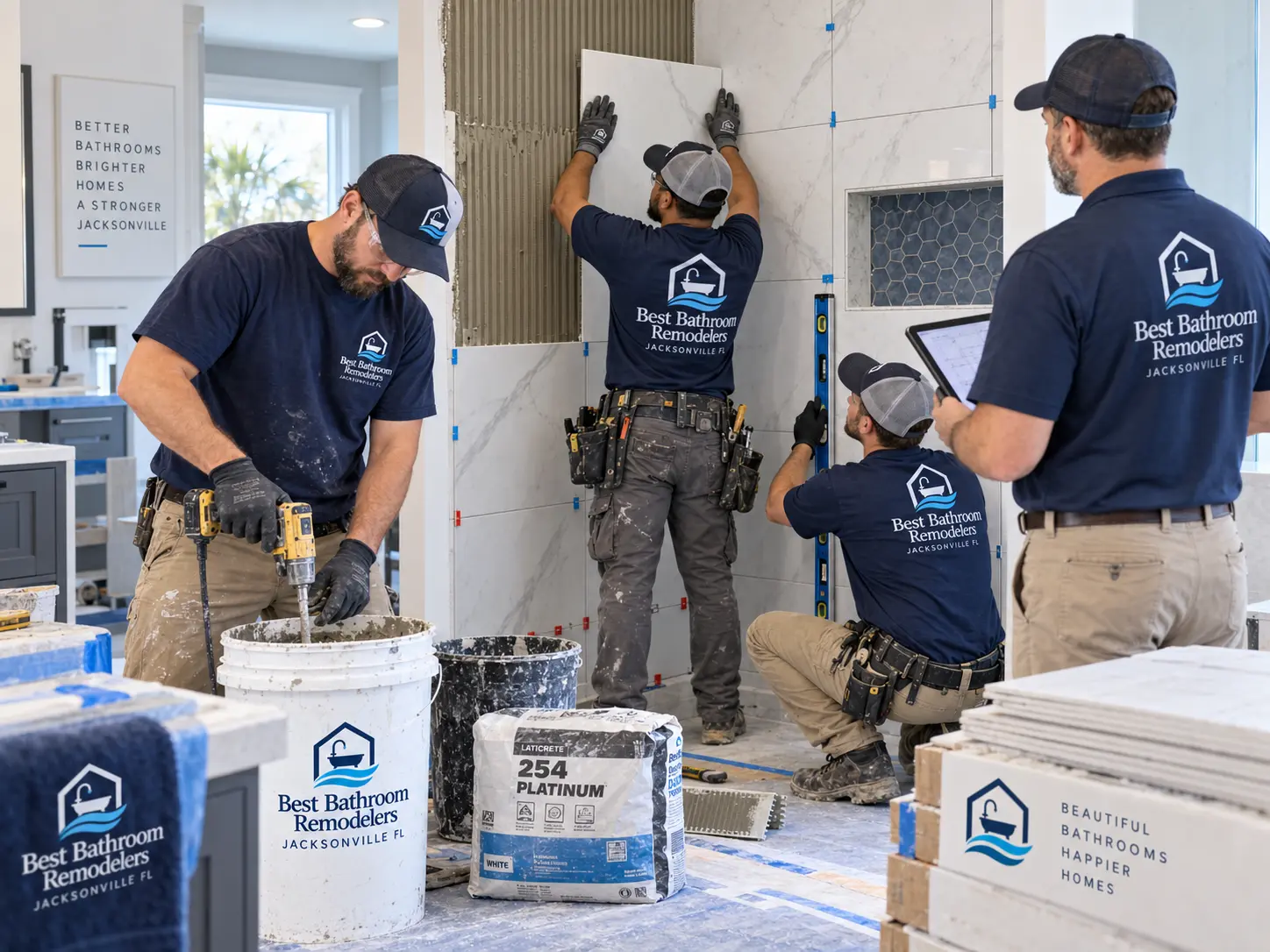
Bathroom Tile Installation in Jacksonville, FL
Tile installation is as much about what's underneath the tile as the tile itself. A beautiful pattern over an unlevel substrate or missing waterproofing will crack, lippage, or leak within a few years, so we spend real time on substrate prep before a single tile goes down.
This covers both flat-surface tile, like bathroom floors, and wet-area tile in showers and tub surrounds, which each have different waterproofing and slope requirements even when using the same tile material.
Call now for service availability. Please have your 5-digit ZIP code ready.
Who this works well for
- Homeowners replacing cracked, dated, or discolored tile on floors or shower walls
- Anyone wanting large-format porcelain tile for a cleaner, fewer-grout-line look
- Projects needing niches, curbs, or a bench built into a shower during a remodel
- Older homes where the existing substrate needs to be addressed before retiling
Layout patterns and tile orientation
Straight-lay, offset (running bond), herringbone, and stack-bond patterns each read differently in a bathroom, and the right choice depends on tile size and the room's proportions. A long, narrow bathroom often benefits from tile run in the direction that visually stretches the room, while a herringbone floor can make a small space feel more deliberate rather than simply cramped.
We lay out dry patterns before committing to cuts, particularly around vanities, toilets, and doorways, so the final layout doesn't end up with awkward slivers at a focal wall.
Large-format tile and substrate flatness
Tile 12x24 inches or larger reads as more modern with fewer grout lines, but it's far less forgiving of an uneven substrate than smaller tile. Industry flatness tolerances tighten as tile size increases, which often means self-leveling compound on floors or additional skim-coating on walls before large-format tile can be installed without visible lippage at the edges.
Grout selection and color
In Jacksonville's humidity, grout choice affects how well a bathroom resists mildew staining over time. Epoxy grout resists staining and moisture better than standard cementitious grout and is worth the added cost in showers, though it's more difficult to work with and costs more per square foot. Grout color also affects perceived maintenance: darker grout hides soap scum and grime better, while lighter grout shows a cleaner look initially but needs more frequent attention.
- Epoxy grout: Best stain and moisture resistance, recommended for shower floors and heavy-use areas.
- High-performance cementitious grout: Improved stain resistance over standard grout, easier to install than epoxy.
- Color: Darker tones hide grime better; lighter tones show layout lines more crisply but need more upkeep.
Movement joints
Tile needs designed movement joints, not just grout lines, at transitions like where floor tile meets a different material, along long runs of wall or floor tile, and at inside corners in showers. Skipping these joints and grouting solid across a transition is a common reason tile cracks or grout fails prematurely, since the substrate and tile expand and contract at slightly different rates.
Substrate and waterproofing
Cement board or a comparable tile backer goes up first in wet areas, followed by a waterproofing membrane, either sheet or liquid-applied, before any tile is set. On floors, a similar approach applies in showers and around tub surrounds, while dry-area bathroom floors need a stable, flat substrate but not necessarily the same waterproofing membrane, unless it's over a wood subfloor where added protection makes sense.
Niches and curb details
A niche needs the same waterproofing treatment as the surrounding shower wall, including a sloped bottom shelf so water doesn't pool inside it. Curb-mounted showers need the curb wrapped in the same membrane as the walls and floor, with a slope toward the shower drain, while curbless or low-threshold designs shift more of that waterproofing responsibility to the floor transition itself.
Jacksonville-specific considerations
Slab-on-grade floors are the norm across most of Jacksonville, which affects how we handle floor leveling and any moisture testing before tile installation, particularly in older homes where the slab may have settled unevenly. In coastal-adjacent neighborhoods, we also consider salt air exposure for any exposed metal trim pieces used at tile edges, favoring finishes that hold up better against corrosion.
Any tile work that's purely cosmetic and doesn't touch plumbing or structure generally doesn't require a permit, but shower rebuilds involving new waterproofing systems or plumbing changes fall under the Florida Building Code, 8th Edition (2023), and require review through the City of Jacksonville Building Inspection Division.
How our process works
We evaluate the existing substrate, confirm tile selection and layout, and address any leveling or waterproofing needs before installation begins. From there, tile is set, movement joints are placed where required, and grout and sealant finish the job.
Budget
What changes the price
- Tile size and material: Large-format porcelain and natural stone cost more in material and labor than standard ceramic.
- Substrate condition: Leveling compound or additional prep adds time when the existing substrate is uneven.
- Pattern complexity: Herringbone and other angled patterns take longer to lay out and cut than a straight pattern.
- Grout type: Epoxy grout costs more in material and labor than standard cementitious grout.
- Waterproofing scope: Full wet-area waterproofing adds cost compared to a dry-area floor installation.
- Niches and curb details: Each built-in niche or custom curb adds framing, waterproofing, and tile labor.
- Movement joint detailing: Proper transition and expansion joints add a small amount of labor but prevent future cracking.
Schedule
What affects the schedule
A straightforward floor retile over a sound substrate moves faster than a full shower retile, since wet-area work requires waterproofing steps that need to cure between stages.
Large-format tile and intricate patterns add time for layout and leveling, and we account for that in scheduling rather than rushing a step that affects how flat the finished surface looks.
Jacksonville considerations
Slab-on-grade construction is standard here, which affects how floor leveling and moisture considerations are handled before tile goes down.
Humidity makes grout selection and ventilation genuinely important for how long a tile installation looks and performs well.
Coastal salt air near the beaches is a factor in metal trim and hardware finish selection for tile edges.
Our Process
How we run this work
- 01
Assess substrate
We check flatness, moisture, and structural condition of the existing floor or wall.
- 02
Finalize tile and layout
Tile selection, pattern, and grout color are confirmed, with dry layout where needed.
- 03
Prep substrate
Leveling compound, backer board, or waterproofing membrane is installed as required.
- 04
Set tile
Tile is installed with attention to spacing, lippage, and movement joints.
- 05
Grout and seal
Grout is applied and cured, followed by sealant at transitions and movement joints.
- 06
Final inspection
We check for lippage, grout consistency, and proper slope in wet areas.
Design Inspiration
Tile Installation design inspiration
Design references for this type of work. Tap any image for a larger view and the details worth noticing.
Frameless Walk-In Shower with Marble-Look Tile
Frameless glass, large-format tile and a built-in bench and niche create a clean, open walk-in shower layout.
Explore Walk-In Shower RemodelingArched Tile Niche Behind a Freestanding Tub
An arched herringbone niche gives a freestanding tub a backdrop, and matching wood vanities on both walls keep the room balanced.
Explore Primary Bathroom RemodelingMarble Shower and Tub over Herringbone Floors
A wood-look herringbone floor warms up a room finished in marble tile, and a pebble shower floor adds texture underfoot.
Explore Bathroom FlooringWide Shower with Bench Beside a Soaking Tub
A wider enclosure with a corner bench and open towel shelving nearby keeps everyday use easy without crowding the tub.
Explore Bathroom Tile InstallationCompact Bathroom with a Single Wood Vanity
In a tighter footprint, one wood vanity and a corner glass shower keep the walking path open and uncluttered.
Explore Small Bathroom RemodelingRelated Services
Services homeowners often pair with this
Questions
Frequently asked questions
Shower tile requires a waterproofing membrane and sloped substrate for drainage, while dry-area floor tile mainly needs a flat, stable substrate. The tile itself can be the same material, but the prep work underneath is very different.
It can be, since fewer grout lines often make a small room feel less busy, but it requires a flatter substrate than smaller tile to avoid visible lippage. We check the substrate condition before recommending tile larger than about 12x24 inches.
We typically recommend it for shower floors and other high-moisture areas where staining and mildew are the biggest concerns. Standard high-performance cementitious grout is often sufficient on a dry-area bathroom floor.
A niche needs waterproofing behind the tile and a properly sloped shelf, just like the rest of the shower. If either is missing, water gets behind the tile through the grout joints over time even if the surface looks intact.
It's possible in some floor applications if the existing tile is well-bonded and flat, but we generally don't recommend it in showers, where covering old tile can trap moisture issues rather than resolving them.
Cosmetic tile replacement that doesn't touch plumbing or structural elements generally doesn't require a permit, but a shower rebuild involving new waterproofing and plumbing work does, under the Florida Building Code, 8th Edition (2023).
Next Step
Planning a Bathroom Remodel in Jacksonville?
Tell us what you want the finished bathroom to do differently, and our team will walk through scope, materials and next steps with you.
Call now for service availability. Please have your 5-digit ZIP code ready.